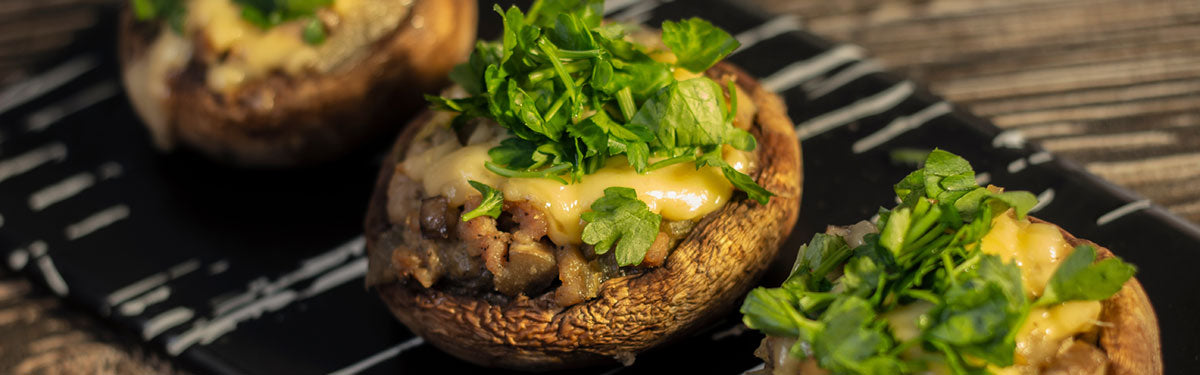
Stuffed mushrooms are one of those dishes that feel elevated without being complicated. Whether served as an appetizer, side dish, or vegetarian main, they deliver serious flavor in a small, satisfying package.
But the world of mushroom recipes goes far beyond cremini caps and cheese filling. From keto stuffed mushrooms to pan-seared scallops made from trumpet mushrooms, gourmet fungi are showing up in creative, crave-worthy ways across kitchens everywhere.
In this post, we’ll cover:
How to make the perfect stuffed mushroom (and what not to do)
Some of our favorite ways to cook mushrooms like maitake, hen of the woods, and eryngii
And why some mushrooms—like lion’s mane or turkey tail—are better extracted than cooked
Let’s dive in.
The Essentials | TL;DR
-
Stuffed mushrooms are elegant, easy, and endlessly adaptable
Learn what to use, what to avoid, and why dry-sautéing makes all the difference. -
Pre-cooking is a must for stuffed mushrooms
Removing moisture before stuffing ensures a crisp, flavorful bite—not a soggy mess. -
Gourmet mushrooms shine in the skillet
From maitake to eryngii scallops, dry-sauté + fat = rich, restaurant-worthy results. -
Some mushrooms are better extracted, not cooked
Mushrooms like reishi and turkey tail aren’t for stuffing—they’re for serious wellness, unlocked through extraction. -
Culinary mushrooms feed the body—functional mushrooms fortify it
Explore how Hamilton’s extracts offer benefits you won’t find in a frying pan.
Stuffed mushrooms are a classic dish with modern potential—especially when you bring gourmet varieties like maitake and trumpet mushrooms into the kitchen. But when it comes to deeper health support, functional mushrooms like reishi, lion’s mane, and turkey tail need a different approach—and that’s where extraction (not roasting) shines.
The Art of Stuffed Mushrooms (And What to Avoid)
Stuffed mushrooms are one of those rare recipes that feel fancy but require almost no effort. The trick? Knowing which mushrooms to use, how to prep them, and what to avoid.
Best Mushrooms for Stuffing:
- Cremini: The classic choice—small, sturdy, and full of umami
- Portobello: Ideal for full-size, entrée-style stuffed mushrooms
- Maitake: Can be gently packed into ramekins for a rustic presentation
- Morels! Because they are hallow.
Maitake? Morel? What the shit-take are we talking about!? Learn more about these other varieties in our blog: Shiitake mushroom vs Maitake & Morel, Which Is Best
What Do You Stuff a Mushroom With?
Think of mushrooms as flavor sponges. Ideal fillings for stuffed mushrooms include:
Garlic + cream cheese + chives
Spinach + walnuts + feta
Roasted red pepper + goat cheese
Ground sausage or lentils with herbed breadcrumbs
For keto stuffed mushrooms: skip the breadcrumbs and use crushed nuts or almond flour
Should You Pre-Cook Mushrooms Before Stuffing?
Yes—always.
Pre-roasting the caps draws out excess moisture and helps concentrate their flavor. This step also keeps your stuffed mushrooms from becoming soggy or watery in the oven.
What You Shouldn’t Do Before Cooking Mushrooms:
- Don’t soak them in water—wipe them clean or use a damp towel
- It's OK to Wash them under the tap.
- Don’t skip the pre-bake step before stuffing
- Don’t overfill—mushrooms shrink as they cook, so balance is key
- Don’t forget seasoning; mushrooms love salt, acid, and herbs
Stuffed mushrooms are forgiving—but these small steps make the difference between “pretty good” and “gone in 60 seconds.”
How to Make Perfect Stuffed Mushrooms (Step-by-Step)
- Preheat oven to 375°F (190°C)
- Clean mushrooms gently with a damp cloth—do not soak
- Remove stems, and scoop out a bit of the cap if needed
- Pre-bake caps for 10–12 minutes to release moisture
- Prepare filling while caps bake (e.g. garlic, cheese, herbs, protein)
- Spoon filling into each cap—don’t overpack your stuffed mushrooms
- Top with breadcrumbs or grated cheese (optional)
- Bake stuffed mushrooms for another 15–20 minutes until golden
- Let cool slightly before serving; garnish with fresh herbs or lemon zest
Works with cremini, portobello, maitake (in ramekins), and hen of the woods (cluster-filled).

Other Gourmet Mushroom Recipes
Stuffed mushrooms may be the gateway, but these pan-seared gourmet mushrooms are where the real magic happens. Each of these varieties brings a unique texture and richness—especially when you master the golden rule:
Always dry-sauté first to release water, then add fat (like butter or olive oil) to develop flavor and crisp edges.
Hen of the Woods (a.k.a. Maitake)
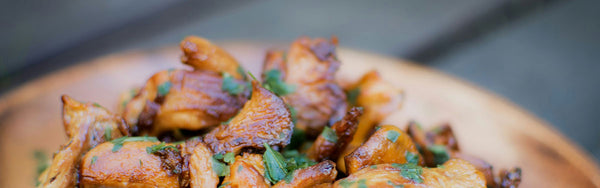
If you’re looking for a simple hen of the woods mushroom recipe, try pan-sautéing with garlic, olive oil, and a splash of tamari until the edges crisp.”
- Torn into small clumps, dry-sautéed until they release moisture
- Add olive oil, garlic, and fresh thyme, then cook until edges are crispy
- Finish with a splash of tamari and lemon zest for an umami kick
Lion’s Mane
- Slice into steaks then dry-sauté until the pan is nearly dry.
- Pressing down with spatula to squeeze the water out.
- Add butter, fresh garlic, and your favorite herbs, then sear into golden "steaks".
Alternately, try our: Best Lion's mane Mushroom Recipe: Crispy Crab Cakes
Trumpet Mushrooms (Eryngii)
- Cut into thick rounds (“scallops”), dry-sauté cut-side down
- Add miso-butter glaze and pan-sear until golden and crisp
- Serve over creamy polenta or soba noodles with sesame oil
- Try these eryngii scallops for a restaurant-level dish
Lobster Mushroom
- Slice thinly and dry-sauté until water is released
- Add butter, shallot, and smoked paprika—let edges caramelize
- Toss into pasta, spoon over risotto, or pair with white beans
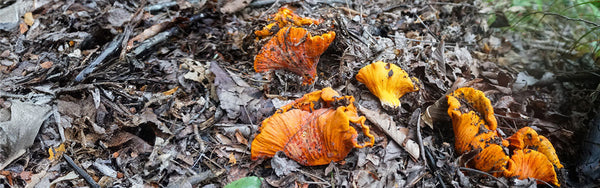
- Bonus: prepare your lobster mushrooms and then use them as the filling for stuffed mushrooms
Coming soon: [[Best Way to Cook Lobster Mushroom, Quick Guide]]

What About Mushrooms You Don’t Cook?
Some mushrooms are simply too woody, tough, or bitter to make stuffed mushrooms or even toss into a skillet—but that doesn’t mean they’re useless. In fact, mushrooms like turkey tail, reishi, and even lion’s mane (when grown large and mature) are most powerful when extracted—not eaten.
These functional mushrooms have been used for centuries to support immunity, cognitive function, gut health, and resilience—but only when their beneficial compounds (like beta-glucans, triterpenes, and polysaccharides) are unlocked through proper extraction.
Don’t cook them—concentrate them. At Hamilton’s Mushrooms, we create potent, dual-extracted blends that deliver the health benefits without the need for chewing through bark-like mushrooms.
Final Thoughts on Stuffed Mushrooms & Beyond
Stuffed mushrooms are just the beginning. Once you learn how to dry-sauté and season well, the world of gourmet mushrooms opens up—whether it’s a delicious hen of the woods recipe, buttery eryngii scallops, rich maitake bites, or pan-seared lion’s mane cakes.
But don’t forget: not all mushrooms are meant for the pan. Some—like reishi and turkey tail—unlock their benefits only through careful extraction.
Want to go deeper into the world of functional mushrooms? Explore how culinary mushrooms differ from Hamilton’s high-potency blends: Types of Mushrooms: What Makes Functional Mushrooms Unique
Frequently Asked Questions
What do you stuff a mushroom with?
Popular fillings include soft cheeses (cream cheese, goat cheese), garlic, herbs, sautéed vegetables, chopped nuts, or even protein like sausage or lentils. For keto stuffed mushrooms, opt for crushed nuts or almond flour instead of breadcrumbs.
Should you pre-cook mushrooms before stuffing?
Yes. Pre-roasting or dry-sautéing the caps before making stuffed mushrooms helps remove excess moisture, intensifies flavor, and keeps the final dish from turning soggy.
What should we not do before cooking mushrooms?
Avoid soaking them in water—mushrooms absorb liquid fast. Don’t skip the dry-sauté step, and don’t overload your filling or overcook your stuffed mushrooms.
Are stuffed mushrooms keto?
They can be! Use low-carb fillings like cheese, herbs, spinach, or mushrooms themselves. Just skip breadcrumbs or sub in almond flour or crushed pork rinds.
Can I make stuffed mushrooms ahead of time?
Yes. You can prep the filling and caps in advance and store them separately, or fully assemble the stuffed mushrooms and refrigerate for up to 24 hours before baking.

Hamilton Pevec
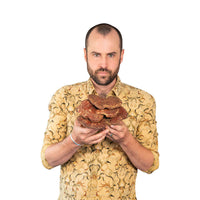
Hamilton believes that effective, affordable medicine is a fundamental right. Healing should never be hindered by cost. Driven by this belief, Hamilton left his career to dedicate his life to mushrooms. His journey is one of lifelong learning—mastering mushroom identification, cultivation, and understanding the profound physiological benefits of these natural “chemical factories.” Hamilton’s Mushrooms is dedicated to making pure, potent, science-backed mushroom extracts accessible to all.